

Check engine & diagnostics · Guide
Loose Gas Caps and EVAP Warning Lights in Tucson Heat
9 min readBy The Mando Guild mechanics
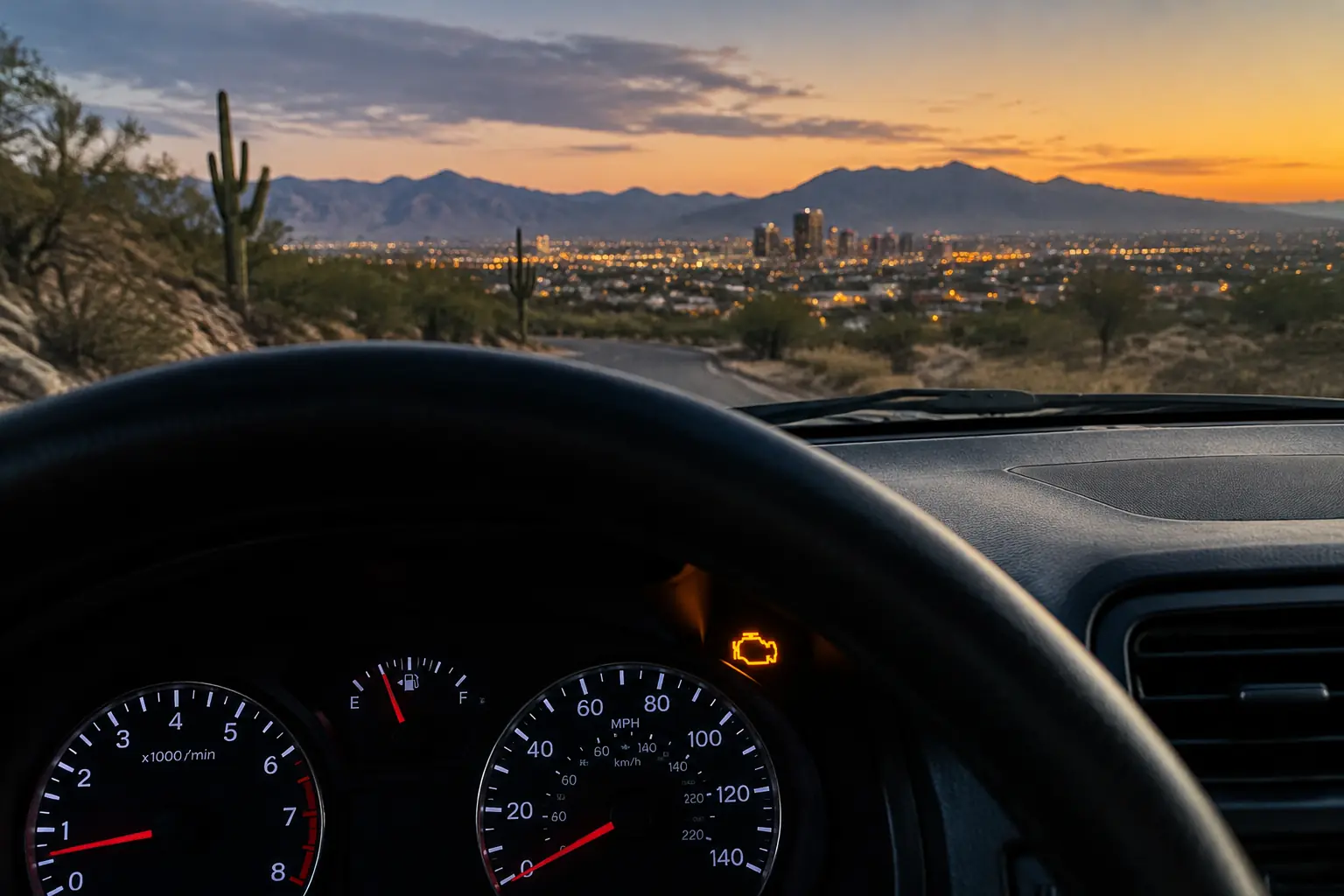
EVAP leak diagnosis in Tucson is the process of finding why your vehicle's fuel vapor system triggers a check engine light. The Mando Guild checks the cap, vapor plumbing, and system controls at your location, then provides a written estimate before you approve any replacement.
What your fuel vapor system actually does
Your evaporative emissions system, usually called EVAP, keeps gasoline vapor from simply escaping into the air. Gasoline produces vapor even when the engine is off. The system generally includes the fuel tank, vapor lines, a charcoal canister, a purge valve, and a vent arrangement. Its job matters because vehicle emissions contribute to air pollution, including the pollutants involved in smog formation.[1]
The charcoal canister temporarily stores vapor. Under suitable operating conditions, the engine computer opens the purge valve so the engine can draw in and burn that stored vapor. The vent side allows controlled airflow. During a leak check, the vehicle changes valve positions and watches how the system responds to pressure or vacuum.
That makes EVAP different from a simple hose carrying liquid fuel. A fault can involve an opening, a valve that does not seal, or a misleading sensor signal. Your car may drive normally while its computer detects a problem. The warning deserves diagnosis even without an obvious drivability change, rather than an automatic gas cap replacement.[2]
Why Tucson summer heat brings vapor problems into focus
Summer highs in Tucson regularly exceed 100 degrees F, putting parked vehicles through substantial heating and cooling cycles.[3] As gasoline warms, its tendency to form vapor increases. An EVAP system must manage those changing conditions, including the heat soak after you shut off an already warm vehicle.
Heat does not mean a healthy system should leak or set a code. It can make an existing sealing weakness more apparent, while repeated temperature changes can contribute to aging seals and plastic connections. A hardened cap gasket, damaged line connector, or marginal valve may behave differently hot than cold. That is why the conditions surrounding the warning are useful diagnostic information.
An afternoon warning after parking near Tucson Mall does not prove the afternoon heat caused the failure. The computer may be reporting a test performed earlier. Some vehicles also postpone EVAP self-tests when temperature or fuel level falls outside their required range. Tell your mechanic when you fueled, where the gauge sat, and whether the warning followed a hot soak. Those details help guide testing without turning weather into a diagnosis.
What P0455 and P0456 tell you, and what they do not
P0455 generally indicates that the computer detected a gross EVAP leak or an inability to establish the expected test condition. P0456 generally indicates a very small leak. The exact diagnostic procedure depends on the vehicle, its system design, and any other stored codes. Neither code identifies a specific replacement part by itself.
A loose or missing cap can produce a large-leak result, but so can a disconnected vapor line or a valve that remains open when it should seal. A small-leak result can come from a subtle sealing defect elsewhere in the system. The code describes the result of a monitored test, not necessarily a visible hole of an obvious size.
Before clearing anything, record all codes and available operating data. A related valve circuit code can change the testing order, and pending codes can help show whether the fault is developing or recurring. Our guide to understanding OBD-II trouble codes explains that distinction in more detail. For this problem, the practical rule is simple: use the code to choose the test, not the part.
When checking the gas cap is a sensible first step
If the light appeared after refueling and there is no fuel smell or visible leakage, checking a conventional gas cap is reasonable. Park safely, shut off the engine, and follow your owner's manual. Look for a cap that is missing, cross-threaded, or not fully seated. Reinstall it according to the vehicle's instructions rather than assuming every cap uses the same number of clicks.
Inspect the accessible sealing area for damage or trapped dirt. A cap can feel tight while its gasket fails to seal against the filler neck. Cracks, a distorted seal, or damage to the mating surface deserve attention. Routine visual checks are useful, but they do not replace diagnosis when a warning persists.[4] Avoid applying grease, sealant, or improvised gasket material.
Capless fillers require a different approach because their internal sealing doors take the place of a screw-on cap. Do not pry those doors open or insert tools to clean them. Follow the manufacturer's procedure. If you recently installed an aftermarket locking cap on a conventional filler, mention that too. Correct fit and sealing behavior matter more than whether the cap happens to thread on.
Why tightening the cap may leave the light on
Tightening a loose cap fixes only that particular opening. It cannot close a cracked vapor hose, repair a damaged filler neck, or make a sticking purge valve seal. If the cap was never the leak, repeatedly tightening it changes nothing. Replacing it without evidence can also leave you with the original fault and another receipt.
Even when the cap was the entire problem, the light may not turn off immediately. The computer typically needs to run its monitor again and see acceptable results. EVAP monitors often require particular temperatures, fuel levels, and parking or driving conditions. There is no universal number of miles that guarantees the test will run on every vehicle.
Do not disconnect the battery just to erase the reminder. Clearing diagnostic information can remove useful clues and reset emissions readiness monitors. Many vehicles in the Pima County metro area require emissions testing, and readiness status matters for applicable OBD inspections.[5] If an inspection is approaching, see how a check engine light affects Arizona emissions testing rather than trying to time a reset.
How a properly controlled smoke test finds hidden leaks
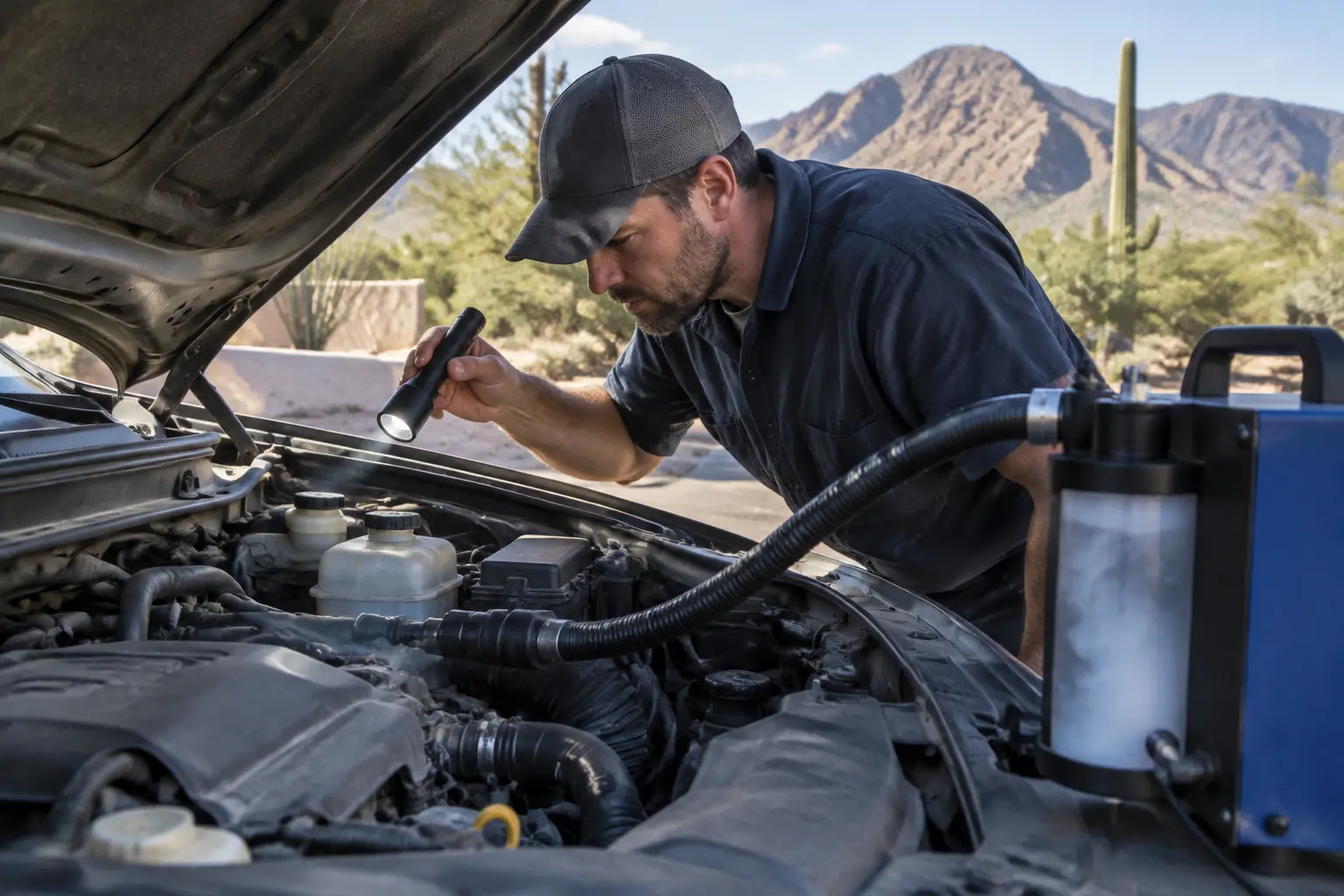
A smoke test introduces visible test vapor into the EVAP plumbing using equipment intended for that system. With the appropriate openings closed and the system configured according to service information, escaping smoke can reveal a leak that is difficult to see otherwise. Connections above the tank, filler components, and small hose splits can all require careful inspection.
Pressure control matters. EVAP components are designed for very low test pressures, not unrestricted shop air. The correct equipment, test medium, connection point, and vehicle procedure protect the system and make the result meaningful. This is not a suitable job for a homemade smoke source, an open flame, or a compressor connected directly to the tank.
Smoke alone does not answer every question. An open vent can release smoke normally unless the test procedure calls for it to be closed. Some leaks appear only under vacuum or at a certain temperature. A technician may combine smoke testing with flow readings, pressure or vacuum checks, and scan-tool commands. The goal is to distinguish an actual defect from a system that was not properly prepared for testing.
Why valves and sensor readings need attention too
The purge valve regulates vapor flow toward the engine. If it leaks when commanded closed, it can interfere with the system's ability to hold the expected test condition. Depending on the vehicle, a purge fault may also accompany hard starting after refueling or an uneven idle. Those symptoms are clues, not proof that the valve needs replacement.
The vent valve and associated filter deserve a separate check. A vent that cannot seal can mimic a leak, while a restriction can interfere with normal airflow. Dirt around an exposed vent assembly may be relevant, but Tucson dust is not a diagnosis by itself. Testing must show whether the component opens, closes, and passes air as intended.
Pressure sensor readings also need to make sense before they are trusted. A biased sensor, wiring problem, or unsuitable test condition can mislead the computer or the person interpreting the scan tool. A reliable repair plan connects the code, component operation, and test results. That evidence-based approach is more useful than treating a repair guide or parts listing as confirmation of a failed component.[6]
What we check on-site in Flowing Wells and greater Tucson
The Mando Guild is a mobile mechanic service, not a walk-in shop. We drive a stocked service van to your home, workplace, or a suitable roadside location. For an EVAP concern, the visit starts with diagnosis: your description of the warning, recent refueling or repairs, stored codes, and the information available from the vehicle.
We inspect accessible cap or filler components, vapor connections, and relevant wiring, then determine which functional tests the system needs. That may include evaluating purge and vent operation, pressure readings, and whether controlled smoke testing is appropriate. Access matters. A component above the fuel tank may require a different repair setup than a cap or an accessible engine-compartment valve.
You receive a written estimate before replacement work, and nothing is replaced until you approve it. We explain the findings, any access limitations, and the next step instead of promising every EVAP repair can happen in every parking space. Our mobile diagnostics service serves most makes and models throughout greater Tucson, including Flowing Wells, Midtown, Oro Valley, and Marana. The repair recommendation follows the evidence gathered from your vehicle.
What Tucson drivers should note between fill-ups
During the stretch of hot afternoons and monsoon weather, keep a simple record rather than repeatedly clearing the light. Note the date, approximate fuel level, recent fill-up, and any starting trouble. Tucson's official monsoon season runs June 15 through September 30.[3] A warning during that season still needs testing, not an assumption that rain or heat explains it.
Stop fueling when the nozzle shuts off normally instead of repeatedly topping off the tank. Overfilling can send liquid fuel into vapor-handling components on some vehicles. If the pump repeatedly shuts off before the tank is full, report that separately. It can help direct attention toward filler or venting problems, although the pump itself can also affect the experience.
Fuel odor changes the priority. A gasoline smell can indicate a fuel-system problem that requires prompt attention.[7] If you see liquid fuel, smell strong or persistent fumes, or suspect an active leak, shut the engine off when safe, avoid ignition sources, and arrange help rather than continuing to drive. Do not open the cap or attempt leak testing while investigating a strong fuel odor.
How to confirm the repair without guessing
A completed repair should address the demonstrated failure and include an appropriate recheck. Depending on the system, that can mean confirming sealing, testing valve operation again, or checking that pressure readings respond correctly. An extinguished dashboard light immediately after codes are cleared is not, by itself, proof that the leak is gone.
Some confirmation happens through a commanded test, while other vehicles need their normal monitor to run under qualifying conditions. Ask what was found, what was corrected, and what remains to be verified. If the light returns, keep the new code information. A recurring warning may represent the original issue, another leak, or an unrelated engine fault.
For broader warning-light guidance, read our Tucson check engine light guide. For an EVAP concern, bring the code if you have it, but do not buy a cap or valve just because its name appears in a search result. Call The Mando Guild at (520) 704-0441 or request service Monday through Friday, 8 a.m. to 5 p.m. We are closed Saturday and Sunday, and roadside help is available only during business hours.
Sources
- U.S. Environmental Protection Agency, "Smog, Soot, and Other Air Pollution from Transportation." www.epa.gov/transportation-air-pollution-and-climate-change/smog-soot-and-other-air-pollution-transportation (opens in a new tab)
- Car Care Council, "Don't Let the Check Engine Light Turn You Off From Making Needed Repairs." media.carcare.org/2018-05-01-Dont-Let-the-Check-Engine-Light-Turn-You-Off-From-Making-Needed-Repairs (opens in a new tab)
- National Weather Service, Tucson, "NWS Tucson Forecast Office." www.weather.gov/twc/ (opens in a new tab)
- Car Care Council, "Car Care Guide." www.carcare.org/car-care-guide/ (opens in a new tab)
- Arizona Department of Environmental Quality, "myAZcar Vehicle Emissions Program." myazcar.com/ (opens in a new tab)
- Consumer Reports, "Car Maintenance and Repair Guide." www.consumerreports.org/cars/car-maintenance-and-repair-guide/ (opens in a new tab)
- Car Care Council, "Your Nose Knows: Six Vehicle Warning Signs You Can Smell." media.carcare.org/2020-05-18-Your-Nose-Knows-Six-Vehicle-Warning-Signs-You-Can-Smell (opens in a new tab)
FAQ
Quick answers
Keep reading
 Pillar guideCheck Engine Light in Tucson: What It Means and What to DoUnderstand solid and flashing check engine lights, Tucson driving conditions, emissions testing, and mobile diagnosis at your location.Read more: Check Engine Light in Tucson: What It Means and What to Do →
 9 min readFlashing Check Engine Light in Tucson: Your Next Five MinutesLearn when to stop, how to protect your catalytic converter, and who to call when your check engine light flashes in Tucson.Read more: Flashing Check Engine Light in Tucson: Your Next Five Minutes →
 9 min readOBD-II Trouble Codes Explained for Tucson DriversLearn what OBD-II codes tell Tucson drivers, what freeze-frame data adds, and why a scan alone cannot identify the repair.Read more: OBD-II Trouble Codes Explained for Tucson Drivers →