
Mobile service · Tucson
Check Engine Light Diagnosis Without Towing Across Tucson
Check engine light diagnosis in Tucson starts with a professional scan at your location, then real testing to find the cause before any part is replaced.
A code is a clue, not an answer. A misfire code might point to a spark plug, an ignition coil, a fuel injector or a vacuum leak. An evaporative system code could be a loose gas cap or a cracked hose. Parts stores will read the code for free, but reading a code and diagnosing a car are different jobs.
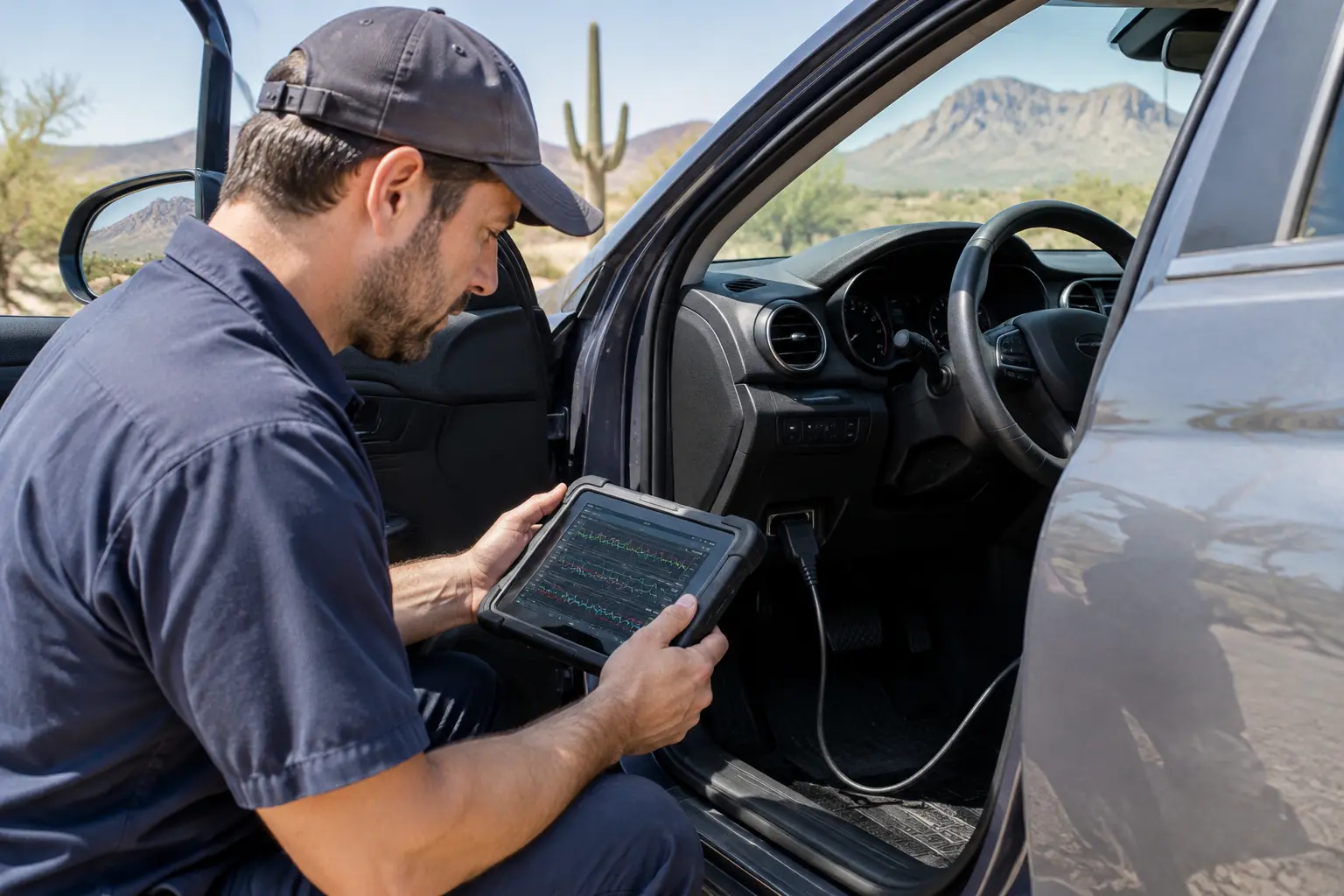
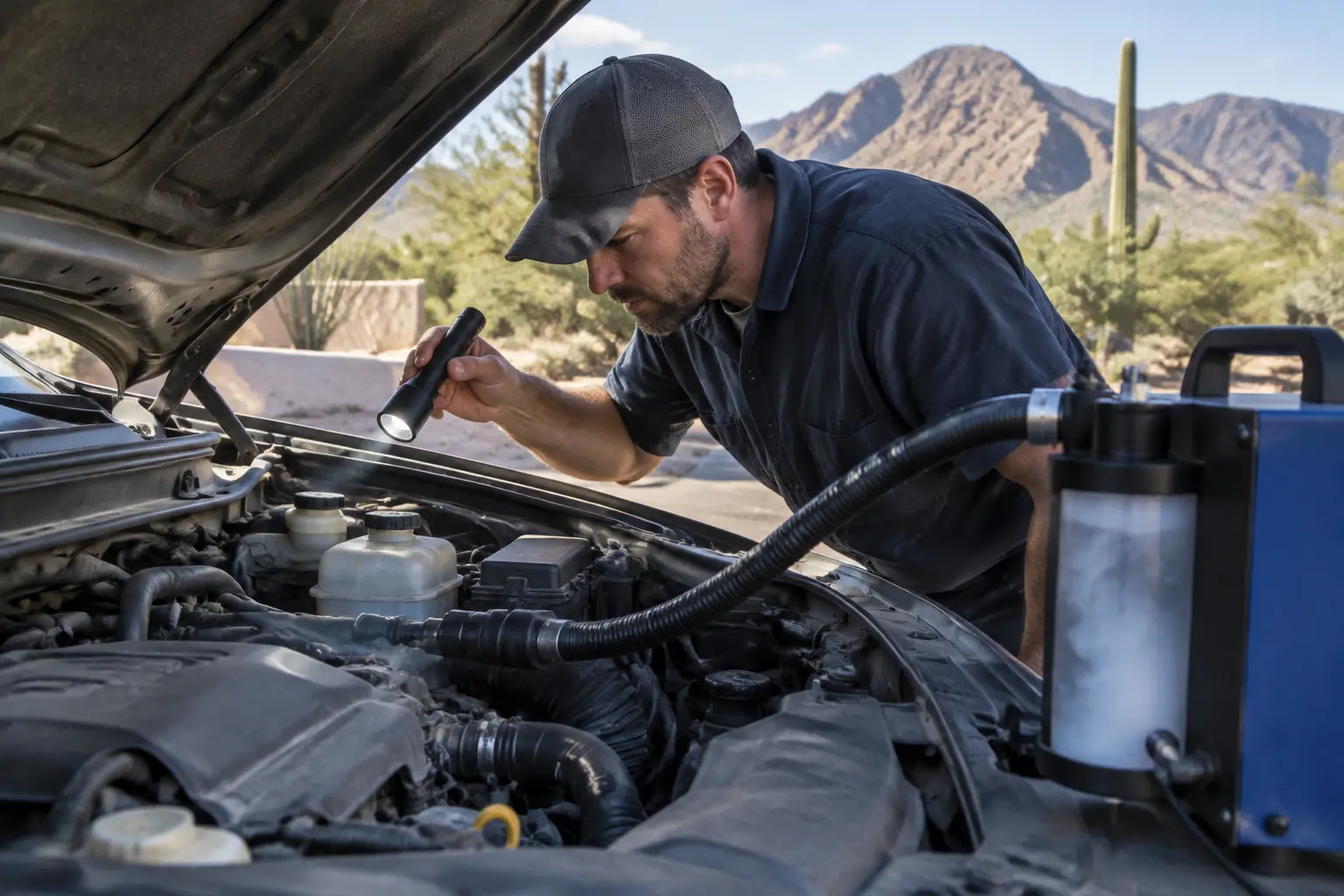
We connect a professional scan tool, record freeze-frame data and watch live sensor readings while the engine runs. Depending on the symptom, we follow up with smoke testing for vacuum and evaporative leaks, electrical tests on sensors and wiring, and visual checks for damaged hoses and connectors. Then we explain what we found in plain words.
That matters in Pima County, where many vehicles must pass the state's emissions test through the myAZcar program. A lit check engine light or incomplete readiness monitors can mean a failed test. We help you fix the root cause and understand how long the car needs to be driven before it is ready to retest.
Check engine light diagnosis in Tucson, explained
Since 1996, cars sold in the United States carry an on-board diagnostic system that watches emissions-related components. When a reading falls outside its expected range for long enough, the computer stores a trouble code and turns on the malfunction indicator lamp, which most people call the check engine light.
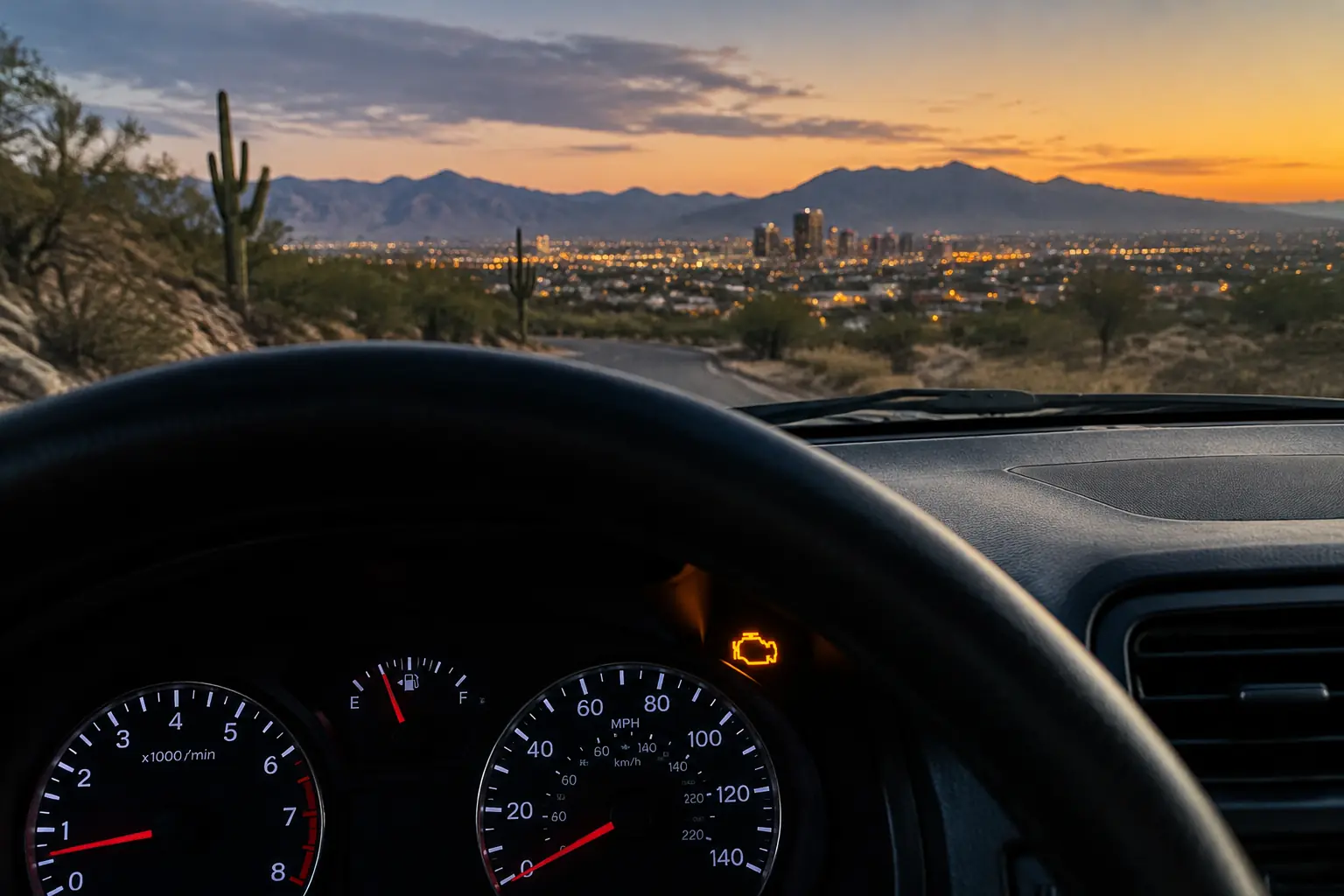
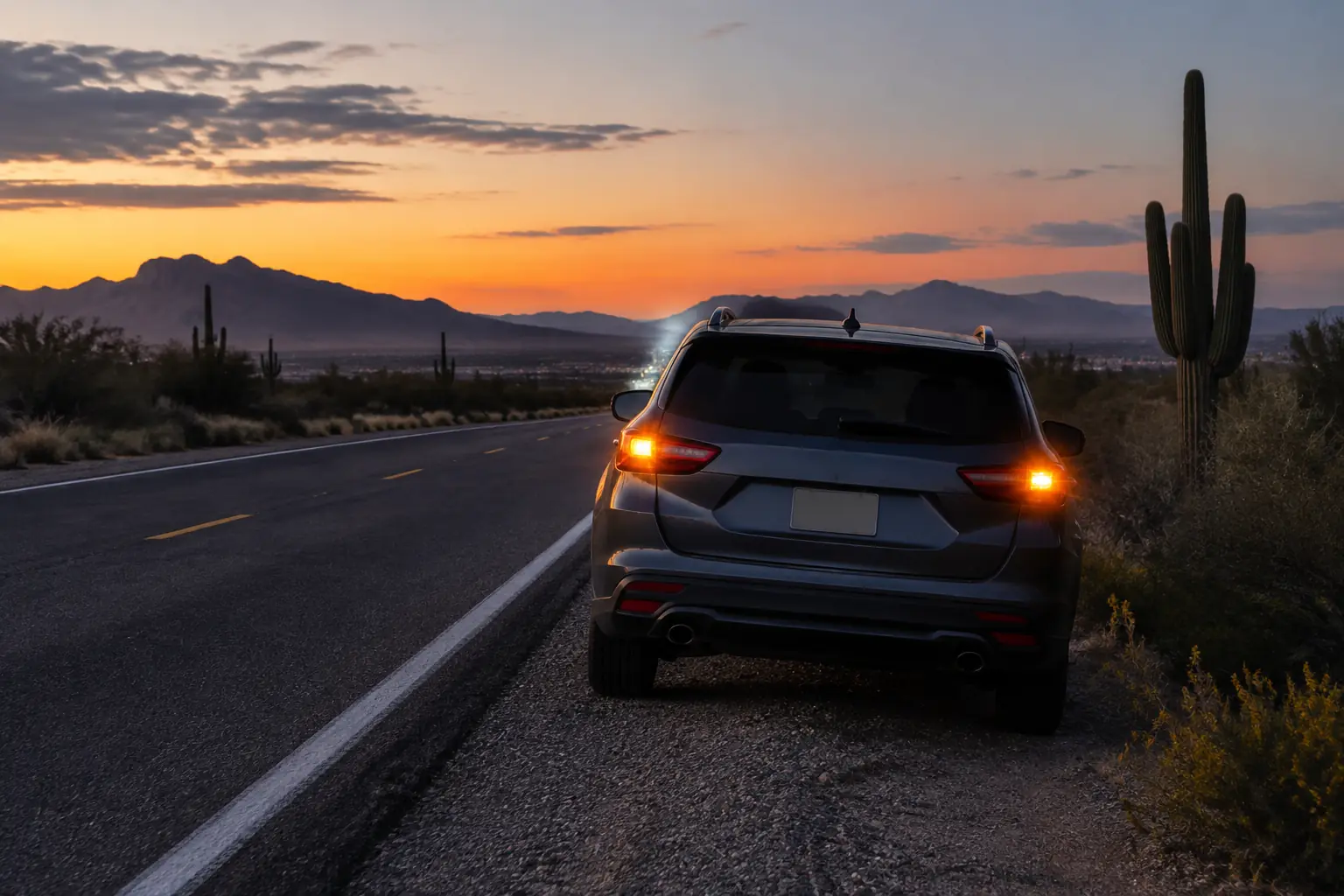
A steady light means a fault has been recorded and should be checked soon. A flashing light usually means an active misfire severe enough to overheat the catalytic converter. If it flashes, reduce speed, avoid hard acceleration and get the car checked as quickly as possible.
Good diagnosis follows a sequence: confirm the complaint, scan, review data, test the suspected circuit or component and verify the fix. Skipping straight from code to part is how drivers end up replacing three sensors to fix one cracked hose.
For the full background, read our guide: Check Engine Light in Tucson: What It Means and What to Do.
Local conditions
Why Tucson heat and dust trigger so many warning lights
Summer heat stresses wiring insulation, vacuum hoses and plastic intake parts, and those small cracks often show up as lean codes or evaporative leaks. Fuel vapor pressure also rises in hot tanks, which makes marginal gas caps and EVAP valves more likely to set codes. Dust clogs mass airflow sensors and air filters, changing fuel trims. We see these patterns often enough to test for them early.
Warning signs
When to book this service
- The check engine light is on, steady or flashing.
- The engine idles roughly or stumbles under acceleration.
- Fuel economy has dropped without a clear reason.
- You smell fuel or rotten eggs near the car.
- The car failed or is due for an Arizona emissions test.
- Another warning light came on along with the check engine light.
How it works
A mobile visit, step by step
- Tell us the symptomCall or send a request with your year, make, model and what the car is doing. We confirm a weekday window for your diagnosis.
- We test on-siteThe van parks at your home, work or roadside spot. We test before touching anything and show you the readings.
- You approve the estimateParts and labor are itemized in writing. Nothing is replaced until you say yes, and optional items are marked as optional.
- Repair and recordWe complete the work, clean up, recycle used parts and fluids, and leave you a written record of what was done.
FAQ
Engine Diagnostics & Check Engine Light questions
Related guides
Read before you book
 Pillar · 9 min readCheck Engine Light in Tucson: What It Means and What to DoUnderstand solid and flashing check engine lights, Tucson driving conditions, emissions testing, and mobile diagnosis at your location.Read more: Check Engine Light in Tucson: What It Means and What to Do →
 Cluster · 9 min readFlashing Check Engine Light in Tucson: Your Next Five MinutesLearn when to stop, how to protect your catalytic converter, and who to call when your check engine light flashes in Tucson.Read more: Flashing Check Engine Light in Tucson: Your Next Five Minutes →
 Cluster · 9 min readOBD-II Trouble Codes Explained for Tucson DriversLearn what OBD-II codes tell Tucson drivers, what freeze-frame data adds, and why a scan alone cannot identify the repair.Read more: OBD-II Trouble Codes Explained for Tucson Drivers →
 Cluster · 9 min readLoose Gas Caps and EVAP Warning Lights in Tucson HeatLearn why Tucson heat exposes EVAP problems, what P0455 and P0456 mean, and how testing separates a loose cap from another leak.Read more: Loose Gas Caps and EVAP Warning Lights in Tucson Heat →
 Cluster · 9 min readWill a Check Engine Light Fail Your Tucson Emissions Test?Learn how check engine lights, readiness monitors, and battery resets affect Tucson emissions testing, and when to schedule diagnosis.Read more: Will a Check Engine Light Fail Your Tucson Emissions Test? →
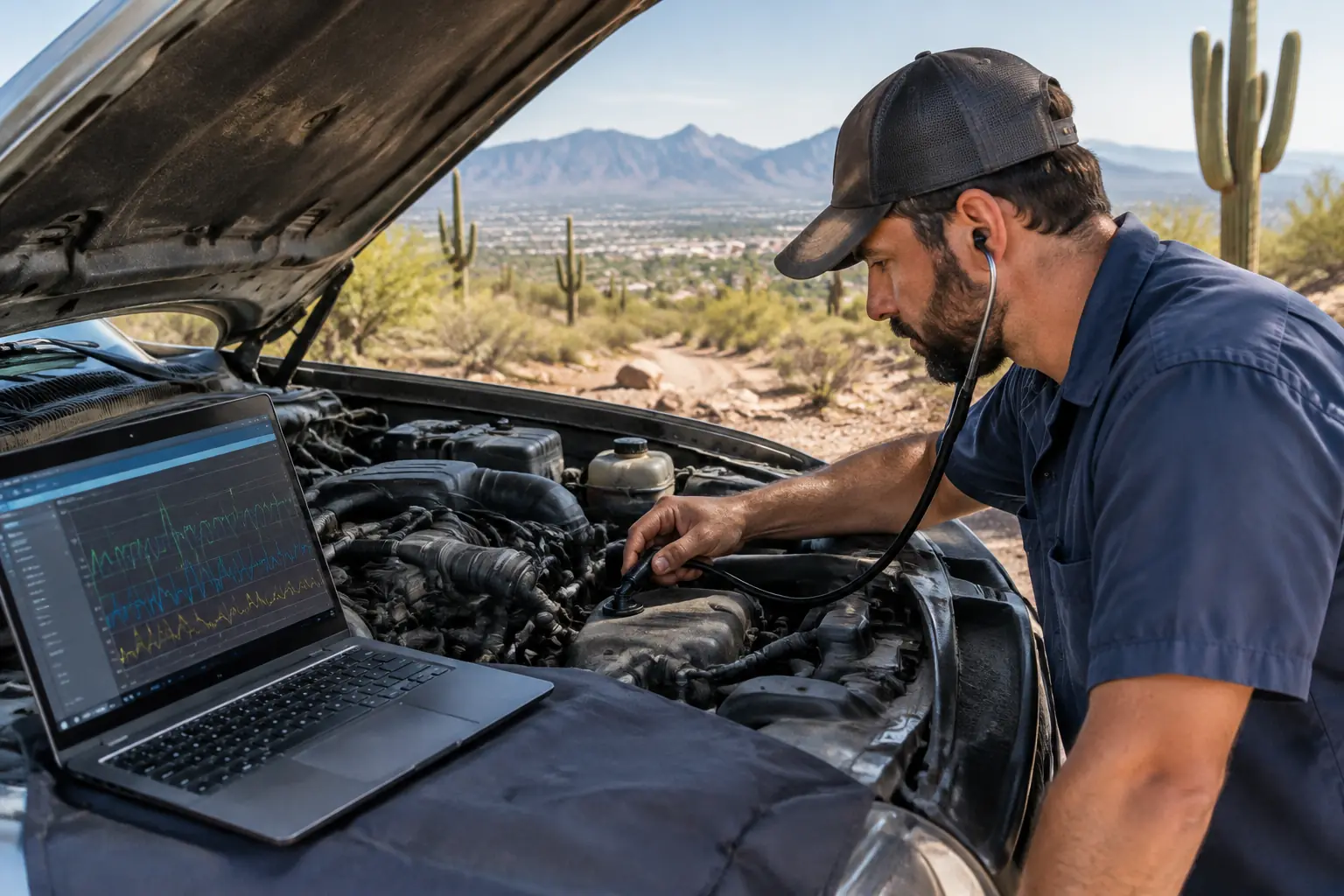 Cluster · 9 min readRough Idle and Misfires in Tucson: Finding the Real CauseLearn how Tucson misfire diagnosis separates ignition, fuel, air leaks, and compression problems before parts get replaced.Read more: Rough Idle and Misfires in Tucson: Finding the Real Cause →
More mobile services
Other repairs we bring to you
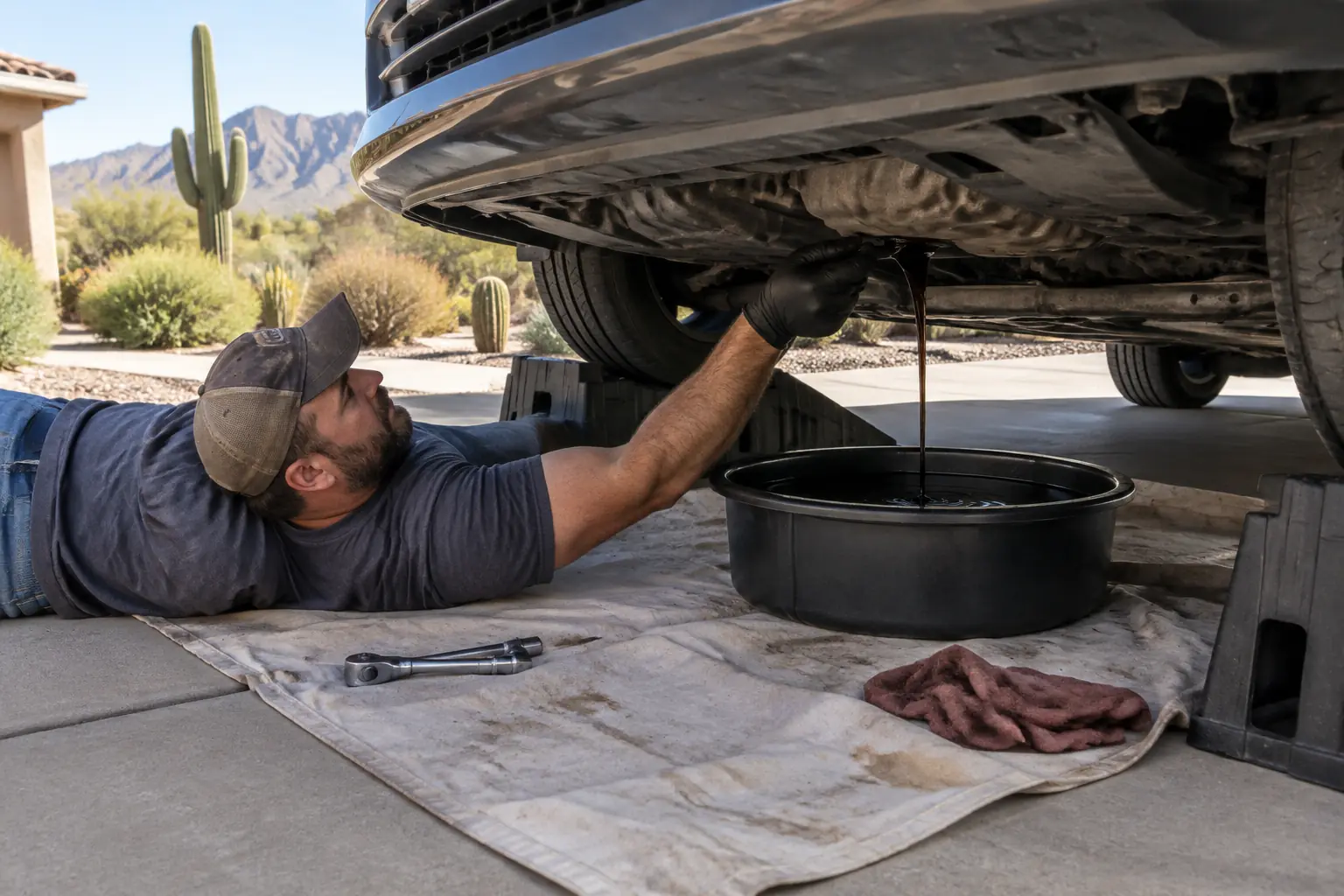 Mobile Oil Change & MaintenanceOil, filters, plugs and fluid checks done in your driveway on a desert-ready schedule.Read more: Mobile Oil Change & Maintenance →
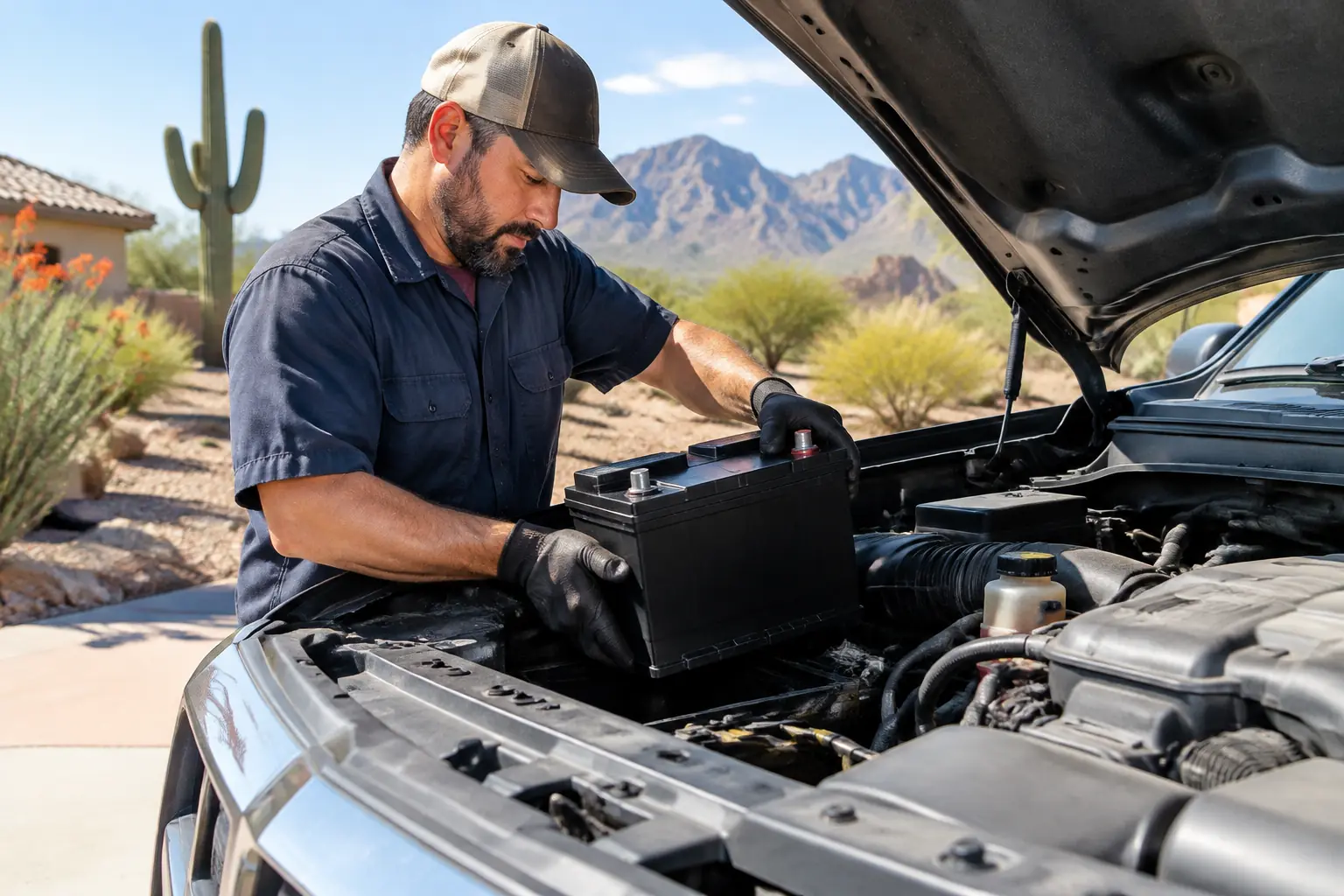 Battery, Starter & AlternatorHeat-tired battery or a car that won't start? We test and replace it where it sits.Read more: Battery, Starter & Alternator →
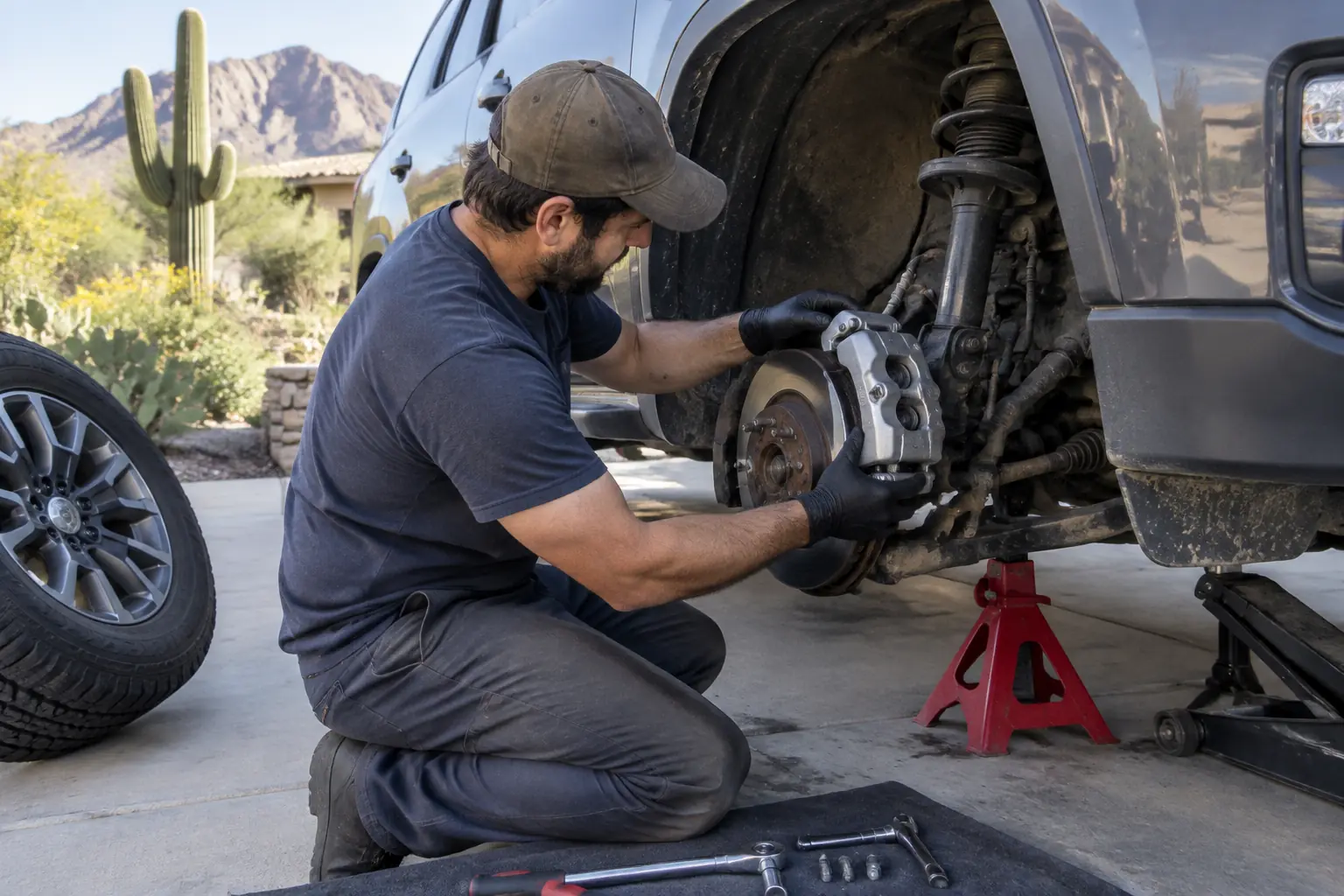 Brake RepairPads, rotors, calipers and fluid measured, quoted and fixed where you park.Read more: Brake Repair →